
Articles
Building Better Soils
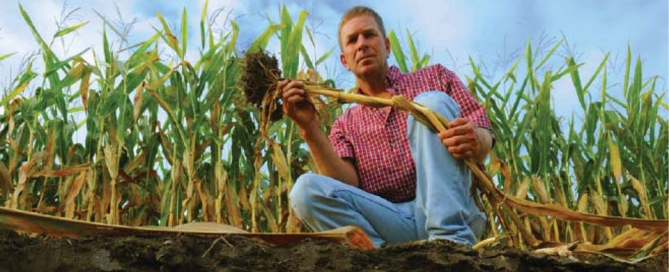
With the determination of gold miners panning for their fortune, farmers are picking through soil profiles these days — also in search of treasure. Those riches are in the form of worms, mites, nematodes, deep-growing plant roots, aggregated soil structure and any tell-tale signs of bacterial and fungal activity. All those are indications of soil quality, and developing the management strategies that will enhance that quality is a sure way to strike pay dirt.
“Healthy soils are teaming with biological activity that increases the productivity of crops and livestock,” says Jill Clapperton, an internationally renowned soil health consultant. “However, you have to feed that soil so it can feed your crop. Planting cover crops and cover crop mixtures designed to increase the level of soil organic matter is an ideal way to provide for the millions of organisms that work together to build a quality soil.”
Clapperton, who formerly led the Rhizosphere Ecology Research Group at the Lethbridge Research Center in Alberta, Canada, now operates her Earthspirit Consulting service from the family ranch near Florence, Montana. Her focus is to develop and promote an understanding of how a diversity of crops enhances biological activity in the soil which spurs the processing of crop residues and the cycling of nutrients back to subsequent crops — provided the system isn’t disrupted by tillage.
This effort takes her not only to laboratories and lecture halls, but also to soil pits dug in crop fields and pastures. One such opportunity was last summer in Gail Fuller’s corn field, just outside of Emporia, Kansas.
Down in that pit, Clapperton worked with USDA-ARS soil microbiologist Kris Nichols to pick away at the soil face and reveal indications of an underground biological world that most of the farmers leaning over the edge hardly knew existed. “There are millions of organisms that live in a handful of soil and they’re part of a soil foodweb that ultimately makes nitrogen, phosphorus and other nutrients available to growing plants,” says Nichols. “Other than earthworms and a few insects, you can’t see them, but the soil structure they create to facilitate this biological community is clearly obvious in a healthy soil.”
Fuller, who had volunteered his field as a stop for a No-Till on the Plains Whirlwind Tour, was glad to see signs of that activity in his soil. “We’ve made soil health a major focus in recent years. When we started no-tilling sixteen years ago we were in a corn/soybean rotation and it wasn’t working very well, so we began adding more crop diversity by double cropping behind wheat. Now, we’ve gone even further by using cover crop blends that include multiple species and even planting companion crops with our regular crops. Our goal is to always have something growing on every acre and last year we grew 22 different crops doing it,” he says.
Clapperton says such crop diversity above ground leads to similar diversity below ground — a key step in enhancing soil quality. “Every type of plant exudes substances from its roots that attract specific microorganisms. These add to the diversity of the soil’s biological community, making it healthier and leading to greater productivity with fewer purchased inputs, like expensive fertilizer.”
“It’s a little corny to say, but in talking about crop diversity — and the various organisms that make a quality soil — it’s true that if you build it, they will come,” she says.
Feeding the soil. Healthy soil provides many benefits, including faster water infiltration, greater water holding capacity and erosion protection, but the ability to cycle crop nutrients and provide ‘free’ fertilizer is a major one. Soil organic matter — made up of decomposed crop roots and residue — is the food that drives soil biology. When soil microbes consume organic matter they give off nutrients that are available for plants to use.
North Dakota farmer/rancher Gabe Brown has seen healthy soils have a major financial impact on both livestock grazing and crop production. “Thanks to no-till and cover cropping, we’ve improved the soil organic matter levels on our ranch from around 2% to the current level of about 4%. At today’s fertilizer prices, each 1% of soil organic matter contains $650 per acre worth of nitrogen, phosphorus, pot-ash, sulphur and carbon,” says Brown.
“This means at our level of 4%, we have $2,600 per acre worth of those nutrients locked in the top six inches of soil. The trick, of course, is to make them available to plants, and that’s where spurring the soil’s biological activity comes into play. Instead of focusing on feeding the crop (with com-mercial fertilizer) we’re focusing on feeding our soil so it feeds the crop.”
Ray Ward, founder of Ward Laboratories in Kearney, Nebr., says soil scientists don’t yet know what im-pact stepped-up soil biological activity has on the release rate of crop nutrients from soil organic matter. “With conventional tillage, we could figure on an annual release of 1% of nitrogen for small grain crops, 2% for row crops and 4% for summer fallow. The release rate is likely higher with the increased biological activity in a healthy soil,” he says.
No-till’s role in building a healthy soil is a physical one — tillage destroys the soil structure and contributes to the loss of carbon that’s need in the soil. “No-till isn’t the end goal, it’s the tool that lets us manage the soil’s ecosystem,” says Dwayne Beck, director of the Dakota Lakes Research Center near Pierre, South Dakota.
Beck, who spurred the adoption of no-till in the Plains, says the goal has always been to allow increased crop diversity. “We needed no-till so we had enough moisture to add soybeans to the crop rotation and that increased crop diversity. Cover crops add to that diversity and they’re the next step for successful no-till programs,” he says.
By Larry Reichenberge
This article was reposted with permission from ars.usda.gov.
Microorganisms
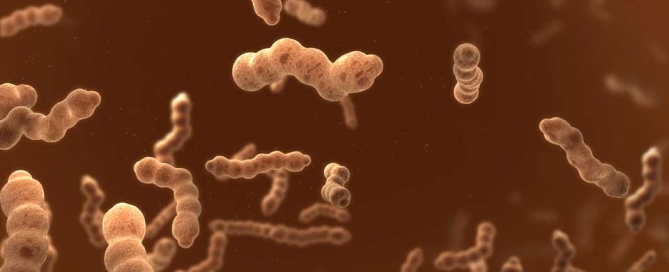
The very first life on this Earth was the microorganisms. From raw elements, they created the soil that supports the plants and higher forms of life. Even to this day, there could be no life without the presence of microorganisms. In addition, they play a major role in keeping the many life species in balance. Whenever any one form of life starts to become overabundant, often a disease caused by microorganisms culls that life form back. Also since no living thing exists forever, all plants and animals eventually die, it is the job of microorganisms to clean up the mess. Without some means of decay or reducing these dead things back to the earth, the whole globe would be thousands of feet deep in dead bodies. The microorganisms not only return dead things back to the earth, but they return it in a state, which serves as food for the next generation of life.
Eliot C. Roberts of The Lawn Institute estimates that there are 930 billion microorganisms in each one-pound of soil under turf. There are about 70 pounds of them living and working in each 1,000 square feet of root zone. Many of these organisms are very short-lived, so the turnover is rapid. Roberts says that 100 pounds of dead microorganisms will contain close to ten pounds of nitrogen, five pounds of phosphate, two pounds of potassium, one-half pound of calcium oxide, one-half pound of magnesium oxide, and one-third pound of sulfate. With 70 pounds of these little creatures in each 1,000 square feet of root zone soil, the poundage adds up to enough per acre for excellent crop production. The farmer or gardener really needs to promote their well-being through organic gardening and farming practices.
Bacteria and Fungi are some of the names we give microorganisms, and the sound of these names makes most people think of dreaded diseases. True, there are some we perceive as bad guys, and they are the ones who make the news. But of the millions of species of microorganisms in existence, these villains number only an extreme few, and they too are part of Nature’s scheme. When any form of life falls from perfection and becomes unfit, they attack to destroy. This helps keep each species of life on earth at its best.
There are volumes written and known about microorganisms, and there are probably many, many volumes unknown. But we don’t need to know it all as long as we realize their importance to our existence and that when they cause problems; it is because at sometime, somewhere, a law of Nature was ignored.
The Garden-Ville Method — Lessons in Nature
This article was reposted with permission from malcolmbeck.com.
Mycorrhizae: Beneficial Fungi in Fertile Soil
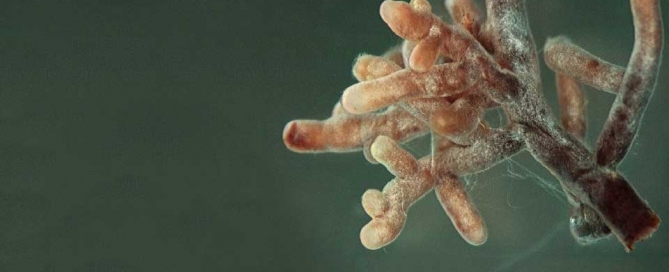
Mycorrhizal fungi form a symbiotic association with the roots of most plants. The fungi grow into or between the cells of the roots and use 10% of the carbohydrates the plant passes from the leaves to the roots. The fungi do not have chlorophyll in the presence of sunlight, so they can’t manufacture carbohydrates. In return for the energy taken from the plants, the fungi grow out and search far and wide for nutrients and moisture. They feed the plant so it can continue to manufacture more and more carbohydrate energy. A plant well colonized with mycorrhizal fungi will have the equivalent of ten times more roots than one without the fungi.
Another benefit of this association is that, as long as the fungi is flourishing, it can prevent all root pathogens and damaging nematodes from attacking the plant root.
Decaying organic mulch on the soil keeps both the plant and the many beneficial soil species, such as the mycorrhizal fungi, flourishing so they can help each other.
The appearance of mycorrhizal fungi was reported in 1885 by a German botanist, A. B. Frank, who believed that water and soil nutrients might be entering trees through these fungi. This fungus acts as a link between the soil and rootlets of the plant. It flourishes in humus. When the association is present, plants are strikingly vigorous, achieve good growth, and gain resistance against attacks by insects and diseases.
Among forest trees and other plants, including food crops, the mycorrhizal association is widespread, habitual, and at times essential. It is stimulated when there is ample light, adequate pH of the soil, good aeration, humus, and moderate soil fertility. It is inhibited by the presence of many chemical fertilizers.
It has been found that these fungi can play an important role in plants grown in infertile soils where phosphorus, zinc, and copper are especially scarce. Mycorrhizae assist tree growth in such soils. As the plants prosper, so do the fungi, since they depend on food from the plants for their own energy. They use about 10% of the carbohydrates transported from plant leaves to the roots.
The efficient system works as follows: As plant roots grow, they encounter zygomycetes, a family of soil fungi. These fungi enter the roots through root hair or root epidermal cells, and grow in the soil. They form hyphae, a network of tiny, thread-like tubes. The hyphae seek out nutrients that are poorly available in the soil areas unexplored by the roots. Hence, the root system is extended by the fungi, since the hyphae enable the plant to explore more areas and to obtain more essential nutrients in useable solution forms than could be possible otherwise.
Within the root, the fungus forms two different structures: vesicles and arbuscles. The former are round, balloon-like structures that store carbohydrates from the roots. The latter are highly branched structures that accumulate nutrients, absorbed by the hyphae, that can be released to the plant.
In studies at Ohio’s Agricultural Research and Development Center, it has been learned that the more fertile the soil, the less need there is for mycorrhizae. Also, it has been found that certain fungi perform nutrient-uptake function better than others. By inoculating apple seedlings with an effective mycorrhizal fungi before planting, growth is stimulated.
The practical beneficial effects of mycorrhizae have been demonstrated convincingly in different parts of the world. Attempts to reforest areas, which failed because of a lack of mycorrhizal fungi, became successful after the soil was inoculated with pure cultures of mycorrhizae-producing fungi or with soils taken from an old forest stand. In the U.S.S.R., for example, certain steppes have been re-forested with oak, after it was found that seedlings inoculated with mycorrhizal fungi were able to resist the extreme climatic conditions. Similarly, high mountain regions of Austria were successfully reforested with spruce by means of mycorrhizae.
In the United States, experiments of prairie soil inoculation produced beneficial effects on poplar cuttings, with better growth and higher survival rate. White pine seedlings cultivated in inoculated prairie soil contained 86% more nitrogen, 230% more phosphorus, and 75% more potassium than plants in untreated soil. It has been demonstrated that mycorrhizal associations unlock food elements from the soil. In experiments, pine seedlings with the fungus had four times as much phosphorus as pine seedlings without it.
Mycorrhizal association is of prime importance in tree nurseries and plantation practices. But it is also important to a variety of other plants too, including many cultivated food crops such as cereal grasses, legumes, fruit trees, and berries.
The Garden-Ville Method — Lessons in Nature
This article was reposted with permission from malcolmbeck.com.
Returning Fertility to the Farm
Most all farm produce — meat, fiber, vegetables and grain — is sent into the cities where it is processed and consumed and eventually ends up in some form of garbage or sludge. A small amount may be composted and used in gardens or the landscape in urban areas. Little, if any, makes it back to the farm from whence it came, where it is most needed and where it belongs. Somehow, with the invention of modem farm chemicals, our human logic (or was it greed?) told us it was no longer worth the effort to recycle the organic materials back to the land. Most industry and agricultural universities jumped on this chemical bandwagon. But there were a few people that understood natural soil fertility and warned of the dangers of wasting and not recycling.
Instead of consulting Nature to see what she recommended, we used human brilliance and the organic-versus-chemical feud started. The guilty are on both sides. Neither the chemical nor the organic supporters are willing to ask Nature’s approval of the other method. Everyone benefits when our food producing soils are improved. There have been and still are many tax-supported programs to help farmers. Some have been questionable. An incentive for the farmer to increase the organic content of the soil would be the most sensible approach. The farmer could grow cover crops instead of cash crops or he could spread compost if he wanted to keep the fields in production while he built the organic content. Another incentive that would be good for the farmer and benefit everyone is to pay for quality rather than quantity of production. The farmer who is well-compensated for high-quality produce will be more able to maintain high organic matter in his soil.
If compost is so needed on farm acres, why am I selling and promoting compost in the cities? Because that is where most of the voters live. When they see the excellent results of using compost in the landscape and on the vegetable garden and taste the quality of compost-grown produce, they will be convinced. When they realize that compost reduces the need for irrigation and pesticides, the city folks will better understand agriculture. It is their vote that will encourage lawmakers to enact laws for a sound ecology. Until the consumer understands and demands fertile soils and healthy foods, it will be hard to change our wasteful practices.
Valuing What Is Valuable
To Nature, compost is extremely valuable. Returning organic materials back to the soil is a must if quality of life is to continue. We, however, as supposedly intelligent creatures, have continually devalued compost. First by saying, “We need to compost the organics because they are filling up our limited landfill space too fast.” More value was put on the hole in the ground than on the food the soil dearly needed. Then after a few cities learned to save the landfill space by composting, they devalued it still further by giving it away or selling it too cheap. Anything free or sold for very little is given just that value-very little. With the very low value put on compost, private composters have little interest, which drops a still greater burden on the cities and their valuable holes.
Cities should use as much of their compost on their own properties as possible, usually they will not have enough. It sets a good example to citizens. The citizens equally share in the value of water, fertilizer and pesticide savings. And tax money is not used to compete with private enterprise. This practice also encourages the private composting and mulching industry-another good thing for the economy of the community.
An Uphill Battle
Nature is crying for help. Compost could be her rescue. Except for a few, our Land Grant Universities have mostly ignored her. I gave a presentation to a dairy group on the value and long term benefits of spreading manure on agricultural soils. The speaker who followed me was an agriculture Ph.D. His first words from the podium were, “Gentlemen, we have to face it. If you have to haul manure across the road or more than a mile or two, it isn’t worth the effort. It only has 20 pounds of Nitrogen per ton.”
On another occasion a wealthy man attended a presentation I gave and ordered a 60 cubic yard load of compost. Before we had a chance to deliver, he called and canceled. He said his County Ag. agent told him compost would bring in diseases, insects and all kinds of pests. He also said the nitrates would keep the trees green too long in the fall and then they would freeze. These two college educated gentlemen should have studied more in Nature instead of in the classroom. They would have a better education.
One of my employees, an ex-pro ball player, has three children who also excel in sports. He approached their school and suggested they spread compost on their ball fields. Not only would they save water and fertilizer, but the turf would be thicker and softer, which could also help prevent injuries. He was rejected with, “Oh no, our students would get disease and infections from compost.” I fail to see their logic, especially since they apply all types of toxic pesticides and chemicals to the turf for those kids to play in. These are not isolated incidences. We have experienced this ignorance many times and so have other composters and organic growers.
We have since spent a few thousand dollars with a well-respected microbiologists on testing. He found no disease causing organisms in the compost. To some this research still wasn’t convincing. There seems to be a mindset, that anything dead, or of animal residue is awful and it should be disposed of at a dump that is not near their back yard. The research also discovered that 27% of the isolates were insect pathogens, and another 18% of the isolates were important in the bioremediation of environmental pollutants. Compost tea is now being used to help control the imported fire ant and also being used as a fungicide.
Bioremediation is nothing more than selective composting. If given enough time the microbes in a well-constructed compost pile can disassemble any toxin man has put together. Compost should be used on athletic fields and on any lawn where children play, especially if toxic pesticides have been used there in the past. Compost will help clean up the damage that has been done in the past through the use of toxic chemicals. Our kids are in much more danger from them than they are from good, clean soil
Because the testing proved there were no harmful pathogens in the compost, we have finally seen it used on two football fields. The results are so good other athletic directors are requesting compost for their playing fields.
We have since ended up with a bonus in our sales pitch. The teams that play on the two football fields we composted both won the state championships of 1995 class 5A.
The Judge
A Master Designer created Mother Nature and authored the natural laws. We had no part in making, designing or enacting a single rule. We are only part of Nature. We cannot change, alter or break any of the laws without causing harm to ourselves.
Everything in Nature (even what we call waste) is designed to be perfect and has a purpose. We are the highest beings on earth, so everything on earth was designed to be of service and aid to us. If we studied from this approach we would learn things, make discoveries and see things otherwise blocked from view.
The future of a livable existence on earth hinges on our knowing and obeying the natural laws. If we allow the environment to rule and Mother Nature to judge, our existence on earth could only improve.
We too were designed to be perfect … except the Master Designer gave us free will.
Greed, envy and jealousy-all traits of human free will-seem to influence public policy, sway bureaucracy, and taint our written laws. They even decide where to place sewer plants, landfills and the compost operations demanded by Nature to recycle the huge amounts of waste we create. Placing these entities could be the easiest decision to make if geology and environment were studied and Nature was given first consideration and allowed to rule.
True, no one wants these sites in their backyard, but we all create waste and it has to go someplace. Moving these sites too far creates pollution from vehicle wear and exhaust. Noise, dust, traffic and strong odors are also created in proportion to distance material has to be transported.
Those who live near sites should somehow be compensated. I think cutting property taxes to the degree of nuisances being tolerated would be fair compensation. All other citizens (who also create waste) but who do not have the nuisance should pick up the difference.
When Nature points to the location to place these entities, politics should not be able to overrule.
The Garden-Ville Method — Lessons in Nature
This article was reposted with permission from malcolmbeck.com
Water: Quality, Quantity & Organic Agriculture
No life, not even the simplest, can exist without water. Three quarters of the Earth is covered with water, but most of it is too salty to drink. Only 3% of all the water on Earth is fresh water. Agriculture uses 80%–90% of that small amount. And each year, that 3% is getting more and more contaminated with sewage, pesticides, fertilizers, herbicides and other toxins.
Water consumption per capita is continually going up. Texas, California, and Florida are already experiencing water shortages and contamination, at times severe. The population of the earth is continuing to grow. Our grandchildren will live to see the population double.
The book, Tapped Out by Paul Simon, former United States Senator and current director of the Public Policy Institute at Southern Illinois University, presents a very gloomy forecast. Simon says, “We must act quickly to avoid a major catastrophe.”
The seemingly obvious answer to our fresh water shortage is to utilize seawater. But, as Simon points out, desalination of water is very expensive and energy consuming. It costs more than $2,000 per acre to use desalinized water in agriculture. Although new technology for desalinization is being developed that may make it more cost effective, it is still in the future.
Building dams to create new lakes will not solve the problem either. In many areas, soil conditions make building lakes impossible. Instead of creating collectors of clean water, the new basins become silted, polluted mud holes. In and areas, lakes lose great amounts of water to extreme evaporation.
Global warming is also believed to contribute to water problems. Given all these contributors, it is easy to see that Simon is not overstating the seriousness of the water crisis. In his book, he mentions several ways to help solve the problem, but he misses one of the most important and best solutions — organic rich soil, the best and easiest answer to quality and quantity of fresh water.
Simon, like most people, does not have a clear understanding of how Nature builds and maintains fertile topsoil and how rich soil collects and saves fresh water. Modern agriculture generally ignores this process.
Farmers, ranchers, landscapers, gardeners, and sports turf keepers that build organic soil and use mulch see the process and understand it well. Around Texas, we now have numerous sports fields and hundreds of lawns that have a thin layer of compost applied regularly. There are many farmers building the organic content of their soil by recycling animal waste and by using low-or even no-till methods that do not disturb the soil and leaves crop residue on top as a mulch. All are reporting their irrigation needs to be less, in many cases, 30%–50% less. Also, these practitioners notice that they need less fertilizer and pesticides. All of this helps prevent water pollution.
Organic matter is the reservoir for water, nitrogen, phosphorus, sulfur, boron, zinc – in short, it is a general catch pan for all nutrients. Also, with a good supply of organic matter as an energy source, the microbes in the soil are able to degrade and detoxify pesticides and other pollutants in the water as it passes through the soil. This is important to maintaining water purity.
After realizing that 55 inches of water is lost each year from lakes and bare soil in Central Texas due to evaporation, and after studying the Edwards Aquifer, San Antonio’s only water supply, Dr. Jerry Parsons came to the conclusion that there is only one answer to San Antonio’s water problems. Dr. Parsons, local Agricultural Extension Agent, believes that answer is mulch on the soil and organic matter in the soil.
According to a United States Department of Agriculture (USDA) study, a block of soil containing 4%–5% organic matter, weighing 100 pounds, occupying a space of 3 feet by 1 foot by 6 inches deep, can hold 165–195 pounds of water. This means that a field with such rich soil could absorb a 4–6 inch rain in an hour! This saves water, stops erosion, and helps prevent flood damage.
Soils rich in organic matter also produce more abundant crops. Unfortunately, most soils in the U.S. are way below that organic content – generally between 0.5% to perhaps 2.5%. Soil with that organic content can only absorb about 1/2 inch of rain. When the Rio Grande Valley was first opened for agriculture, the soil organic content was between 3 and 5%. According to soil test labs, the current organic content is about 0.5%.
Lack of organic matter in the soil is the biggest cause of our water problems. California alone is losing 10,000 acres of usable soil to desert each year because of loss of soil organic matter. Worldwide, 26,000 acres daily are turning to desert and being lost to water in soak and food production.
Since agriculture and landscaping use up to 90% of our fresh water, conservation must start there. Building soil organic content, growing cover crops, selecting correct plant varieties, proper tillage, and recycling back to the land all organic waste, biosolids included, is our only salvation. These practices solve our water quantity and quality problems, our soil loss problems, and food production problems. Organic matter is mostly carbon. Increasing soil organic content takes carbon from the air and places it where it is needed, and that helps check global warming.
Scientists have calculated that if, each year, we build the organic content of the soil 1/10 of 1%, we can offset all the excess carbon we put into the air. Is this solution too simple? [From Burning Fossil Fuels]
It has been demonstrated over and over that organically grown plants require from 10%–50% less irrigation. If 90% of our water goes to irrigation, saving just 10% of that 90% is a lot of water freed up for more agriculture, industry and human consumption.
The Garden-Ville Method — Lessons in Nature
This article was reposted with permission from malcolmbeck.com.